
 Active Podiatry - Podiatry in Kent for Runners & Active People
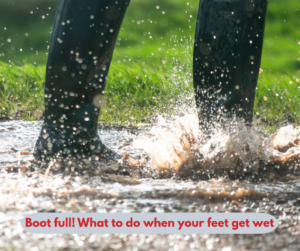
Boot full! What to do when your feet get wet
Splash! Ugh! Boot full!
Wet feet are a part of life for walkers and runners in this country, but a little planning can stop them spoiling your day.
When we were kids we used to enjoy splashing around in puddles, and wet socks and shoes? Well that was something for our parents to sort out.
As we grow older the prospect of getting our feet wet becomes less enjoyable, and the onset of wetter weather brings the risk of a boot full spoiling your day’s walk. Nobody enjoys walking or running in wet shoes and socks, unless you are a cross-country runner or a barefoot looney.
What problems can wet feet cause?
Wet feet, apart from feeling unpleasant, can increase the risk of rubbing and blistering, with cold feet becoming a problem if you are out there in the wilds on a long day’s hike.
Prolonged walking with wet feet destabilises the integrity of the skin over time, leading to splits and cracks which can encourage infection. As the feet warm up inside the shoe, that warm dark damp environment creates the perfect conditions for opportunistic infections such as Athlete’s foot and fungal nail infections, which exploit the breaches in the skin and nails.
Cold feet reduce circulation to the feet, increasing the risk of chilblains or worse if you are up in the hills.
How can I keep my feet dry and what do I do if they get wet?
The sensible choice for long walks or trail runs is to bring an extra pair of socks and a microfibre towel so you can dry your feet and get warm again. Extra socks can also double up as emergency gloves if you lose them.
On a short walk or run it really doesn’t matter, you can shrug it off and make it all part of the outdoor experience. When I was doing competitive cross country, I learned to embrace the muddy wet feet as part of the enjoyment, learning to release my inner child. I would deliberately aim for puddles while others went round, to maintain my racing line! Provided you properly dry your feet and shoes when you get indoors, all should be fine.
What are the best shoes for wet weather?
With running, most running shoes have a light mesh upper which drains quite quickly, so your feet soon warm up again. Gore-Tex shoes are available, but they are more likely to retain water if it gets in over the upper, which it often does. I personally have never bothered with shoes like that.
Most walking boots are waterproof to a greater or lesser extent, as are most walking shoes. Not a bad idea to re-waterproof your old favourites from time to time with a proprietary product. Of course, walking shoes have the same problem as running shoes, in that ingress of water is more likely, which can then get trapped in the shoe.
If you are walking on very boggy or marshy terrain, gaiters can be a lifesaver. In the old days they could be a complete nightmare with laces and buckles being a struggle to sort out with cold hands. Nowadays they are a lot more user friendly and don’t take very long to put on.
Socks are a subject on their own, suffice to say don’t scrimp on those. It is a false economy. Merino wool or ‘Sealskinz’ socks can help to keep your feet warm and dry.
Are wellies good for walking?
Wellies are a complete nightmare. Avoid unless you are a farmer or working with horses. They offer no support and little grip. Their only selling points are that they are quick to put on and genuinely waterproof, but otherwise you are risking problems on a walk.
It takes a few minutes longer to lace up your boots and gaiters, so give your feet what they need. Dog walkers this includes you!
Summary
Obviously walking around with wet feet for prolonged periods is not going to be good for your feet. Soggy skin is going to encourage infections such as Athlete’s foot and fungal nail infections, and if you are really pushing it, Trench Foot! But fortunately our skin is waterproof and can take a bit of a soaking.
My conclusion, enjoy the surprise splashes on short walks, making sure your feet are properly dried out when you get home. If your shoes and boots get wet, stuffing newspaper into them and allowing them to dry for 24 hours will get rid of all the excess moisture and smells.
For longer walks, plan according to the weather and favour boots with gaiters on wet days. Don’t forget to pack spares and make sure your boots retain their waterproofing qualities.
You could of course just stay indoors on wet days and avoid all these problems, but in our climate you’re not going to get out much, and where is the fun in that!
How can we help?
If wet feet have left you with problems such as blisters, athletes foot or fungal nail infections, book an appointment with us at Active Podiatry and Physiotherapy in Kent.