
 Active Podiatry - Podiatry in Kent for Runners & Active People
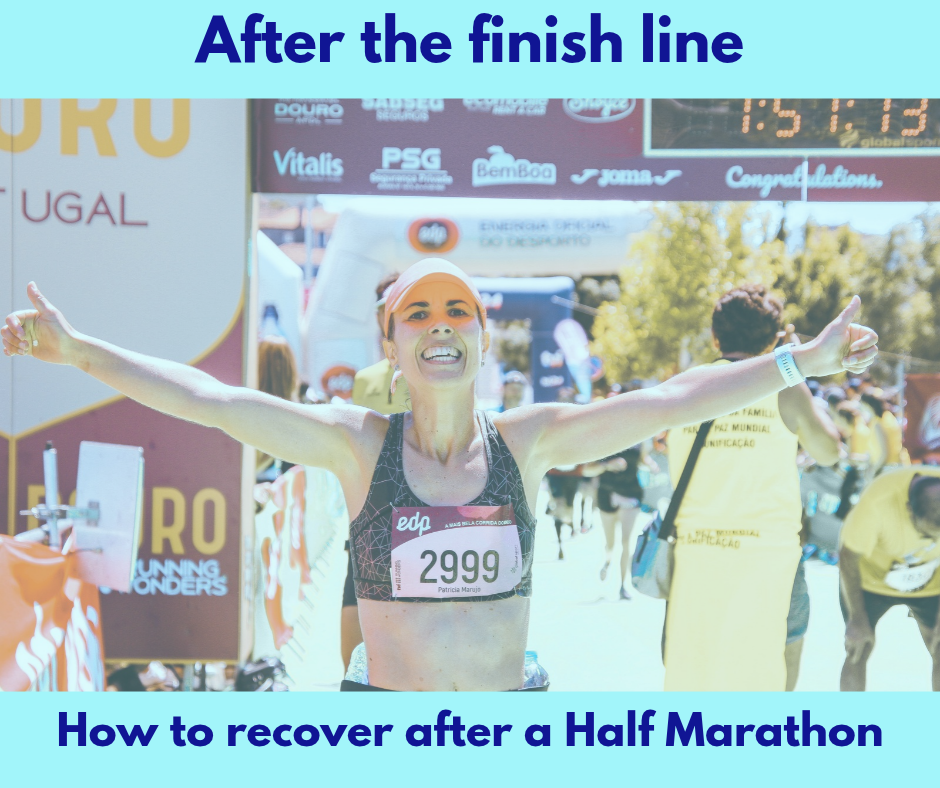
After the Finish Line: How to Recover after a Half Marathon
After the Finish Line: How to Recover after a Half Marathon
Tim Veysey-Smith, Sports Podiatrist, Active Podiatry and Physiotherapy
There is a particular feeling that comes with crossing the line of a half marathon: a mix of pride, relief and legs that suddenly seem to belong to someone else. I know it well, both as a recreational runner and as a sports podiatrist who spends a good part of each week helping runners get back on the road. What I have learned from both sides of the treatment couch is that the way you look after your body in the days after a race shapes how your next run feels, and often how your next block of training goes. Good half marathon recovery starts the minute you cross the line.
Thirteen point one miles works out at somewhere between 18,000 and 22,000 steps, which is roughly 10,000 landings on each foot. Every one of those asks something of your lower limb. Before we get to the practical side, here are three structures that do a large share of that work, and what a half marathon asks of them.
Three Structures Worth Thanking
1. The Achilles Tendon
The Achilles is the thickest tendon in the body, joining the gastrocnemius and soleus to the calcaneus. It behaves much like a spring, storing elastic energy as your heel lowers and returning it at push-off, and it is estimated to carry loads of six to eight times body weight with every stride.
What the race does: tendons respond to load by both breaking down and rebuilding collagen. Research suggests that for the first day or two after a hard effort, the breakdown side runs slightly ahead, before the balance tips back towards repair. The tendon is not injured, but it is temporarily less tolerant of high load. Some morning stiffness that eases as you get moving is common and usually settles within a few days. This is the main reason I advise against rushing back into hill repeats or speed work.
2. The Plantar Fascia
The plantar fascia is a thick band of connective tissue running from the medial calcaneal tubercle to the bases of the toes. It supports the medial longitudinal arch and, through the windlass mechanism, tightens as your toes extend at push-off, turning the foot into a stiff lever to propel you forward.
What the race does: it is placed under repeated tension thousands of times over, and that load tends to increase in the later miles as the calf tires and the foot works harder to control pronation. A little heel tenderness or stiffness on your first steps the next morning is not unusual and normally eases within a few days.
3. The Calf Complex: Gastrocnemius and Soleus
These two muscles share the Achilles tendon and do much of the work of absorbing landing forces and driving you forward. The soleus in particular is a quiet workhorse: biomechanical studies suggest it can generate forces of around six to eight times body weight during running, more than any other muscle in the lower limb.
What the race does: the repeated eccentric loading, where the muscle lengthens under tension as you land, produces microscopic changes in the muscle fibres. This is a normal part of adaptation and is behind the familiar delayed onset muscle soreness that peaks around 24 to 72 hours after the race.
I mention these three structures as they work as a chain. When the calf is fatigued, more of the load passes to the Achilles and the plantar fascia, at the very time they are least ready for it. That is the case for good recovery in a nutshell: give the chain time to restore itself, and it will reward you with stronger, more resilient running.
Six Keys to a Good Recovery
1. Keep moving after you cross the line
Resist the urge to sit straight down. Ten to fifteen minutes of easy walking helps your circulation settle gradually. Put on a warm layer, start rehydrating steadily, and within an hour or so have something containing both carbohydrate and protein to begin refuelling and repair.
2. Look after your feet
As a podiatrist, I would be letting you down if I skipped this one! Get out of your race shoes and have a proper look. Leave intact blisters alone if they are not painful and protect them with a simple dressing. A blackended toenail usually looks worse than it is and will grow out in time. For the first few days, choose comfortable, supportive footwear rather than flat flip-flops or slippers, which ask more of a tired plantar fascia and calf.
3. Make sleep a priority
Much of your tissue repair happens while you sleep, so the first two or three nights after the race matter. An early night does more for your recovery than any gadget. It is worth bearing in mind that a celebratory drink or two can reduce sleep quality, so enjoy it, but in moderation.
4. Choose gentle movement over complete rest
For the first few days, light activity such as walking, easy cycling or swimming keeps blood flowing to recovering tissues without adding impact. Calf mobility work, light self-massage or foam rolling can also help to ease tension. The evidence suggests these mainly help how sore you feel rather than speeding up tissue repair, so use them if you enjoy them, without feeling you must. I am an advocate of post run stretching as it works both as a wind down mechanism and a self-check, helping you to identify structures that are unusually tight or sore, and take action accordingly.
5. Return to running gradually
A useful sign of readiness is when walking downstairs feels comfortable again. Make your first run short and easy, twenty to thirty minutes at a pace where you could hold a conversation. Many runners do well with a week to ten days of easy running before returning to speed work, hills or a long run, and a little longer if this was your first half marathon or a particularly big effort. Your heart and lungs often feel ready before your tendons are, as tendons adapt more slowly than muscle, so let the slower tissues set the pace.
6. Listen to your body and know the difference
Normal post-race soreness tends to be:
- felt in both legs and spread across the muscles
- a little better each day
- eased by gentle movement
It is worth having things looked at if you notice:
- pain in one specific spot, particularly over a bone
- pain that is getting worse rather than better
- pain that changes the way you walk or run
- swelling, or heel and Achilles pain that persists beyond a week or two
Your Next Step
Recovery is not time lost. It is when your training turns into fitness, and it lays the foundation for your next goal. You did the hard work on race day; recovering well is how you build on it.
If something is still niggling a couple of weeks after your race, or your recovery is taking longer than you expected, I am happy to help. At Active Podiatry and Physiotherapy I see runners every week with exactly these questions, and a thorough assessment, including gait analysis where it is helpful, can often get you back to running with confidence sooner than waiting it out. Get in touch to book an appointment, and congratulations on your race.